
The housing
A peninsula of two-family houses
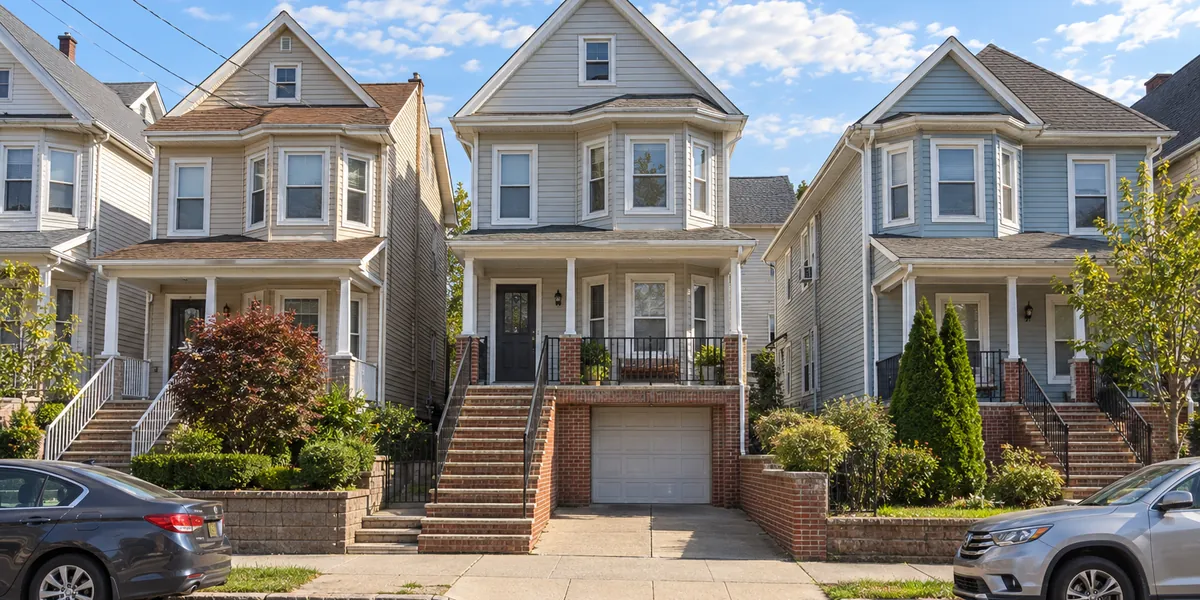
Bayonne runs along a narrow peninsula between Newark Bay and Upper New York Bay, and many of its residential streets are lined with frame two-family houses, with brick attached houses and newer infill mixed in. The right gutter work depends mostly on which of those a house is, so this page is organized by home type.
By home type
Three kinds of Bayonne houses
| Home type | Usual gutter system | Common problem | Start here |
|---|---|---|---|
| Frame two-family | Hanging aluminum K-style gutters on both the front and back, with long leaders | Sagging runs on aging fascia; overflow at corners on steep roofs | Replacement or repair |
| Brick attached or row house | Short front gutter or a gutter set into the cornice; rear gutter or scupper | Leaks at the cornice; clogged conductor heads | Box gutters or leaders |
| Newer infill | Seamless aluminum, often with guards | Undersized leaders for the roof area | Seamless installation |
Request a free estimate
Prefer to talk? Call (201) 293-3992, Mon–Fri 7AM–9PM.
Request received.
A local specialist will reach out shortly. Urgent? Call (201) 293-3992.
Most common jobs
What usually needs doing
On frame two-families
The gutters are often the original hanging type, rehung and patched over the years. Fascia behind them takes years of overflow, so a replacement often starts with new boards. With two units, the front and rear gutters are long, and leaders on the back may drain into shared yards.
On brick attached houses
Shorter runs, but the gutter may be built into a cornice, and the rear is often a flat roof with a scupper. Leaks show up as stains on the brick or the top-floor ceiling.
On newer infill
Gutters are usually sound. The issue is more often too few leaders for a large, flat-ish roof, which shows up as overflow in heavy rain.
Low ground
Avenue E and the low-lying blocks
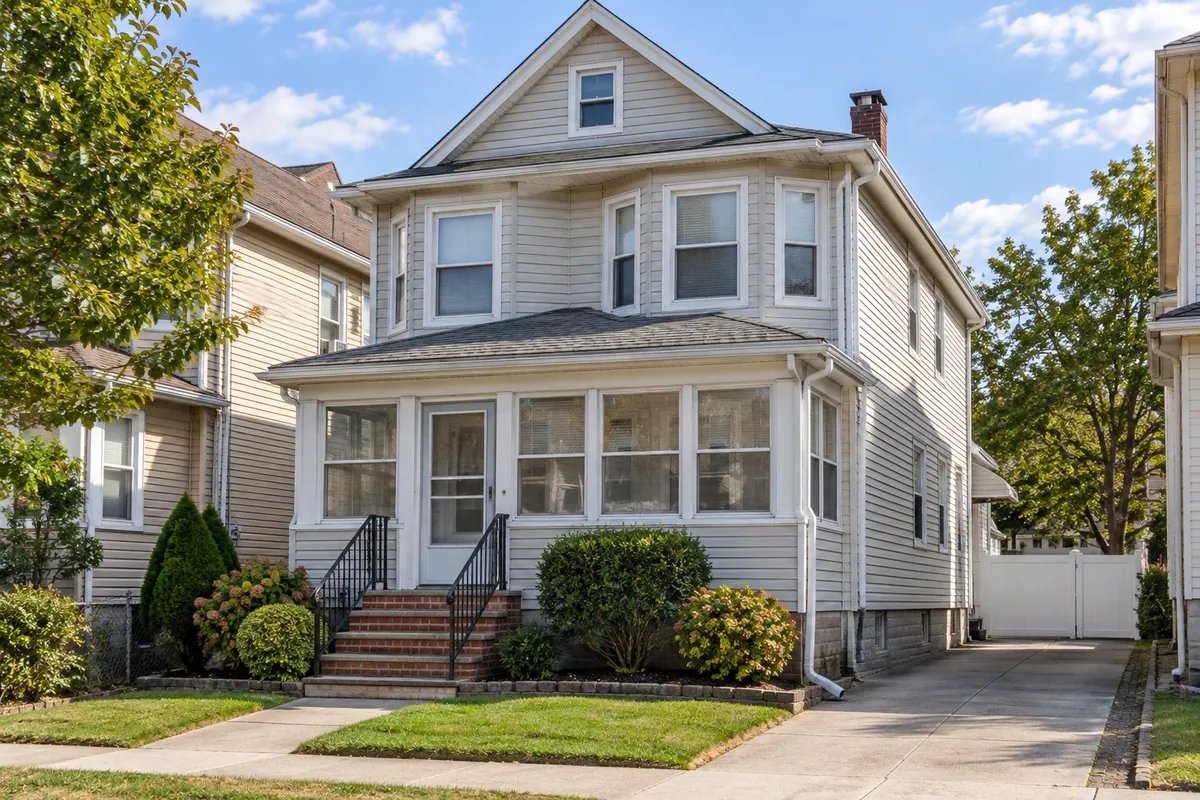
Flood risk in Bayonne is not even across the city. At a 2025 public meeting on flooding, the City of Bayonne noted that "low-lying areas such as Avenue E have higher flood risks than hilly neighborhoods," and advised residents to keep the areas around street drains clear so water can flow.
On a low block, gutters can't change how high the water gets in the street. What they can do is avoid adding to it at the house: leaders that end well away from the foundation, rear-yard drains kept clear, and splash blocks or extensions that move water toward the street rather than into a basement stairwell.
The water side
Exposure on the bay
Houses on the edges of the peninsula face open water, and wind-driven rain hits them harder than houses inland. Gutters on the exposed side see more water blown over the front edge and more stress on hangers. Heavier hangers at closer spacing, and gutters set so the roof edge sheds into them rather than past them, are worth asking about on those blocks.
Bayonne questions
Do two-family houses need different gutters than single-family houses?
Not a different type, but often more of them. Two-families usually have long front and rear runs and more roof area draining to each, so leader count and placement matter more than on a smaller house.
Should leaders on a low block connect to the street drain?
That depends on what the city allows and on what is already there. Where a leader already ties into a working drain, keeping it clear matters. Where it doesn't, extensions that carry water away from the foundation are the usual answer. Any new connection should be checked with the city first.